

Virtual Author Talk with Dr. Vivienne Ming
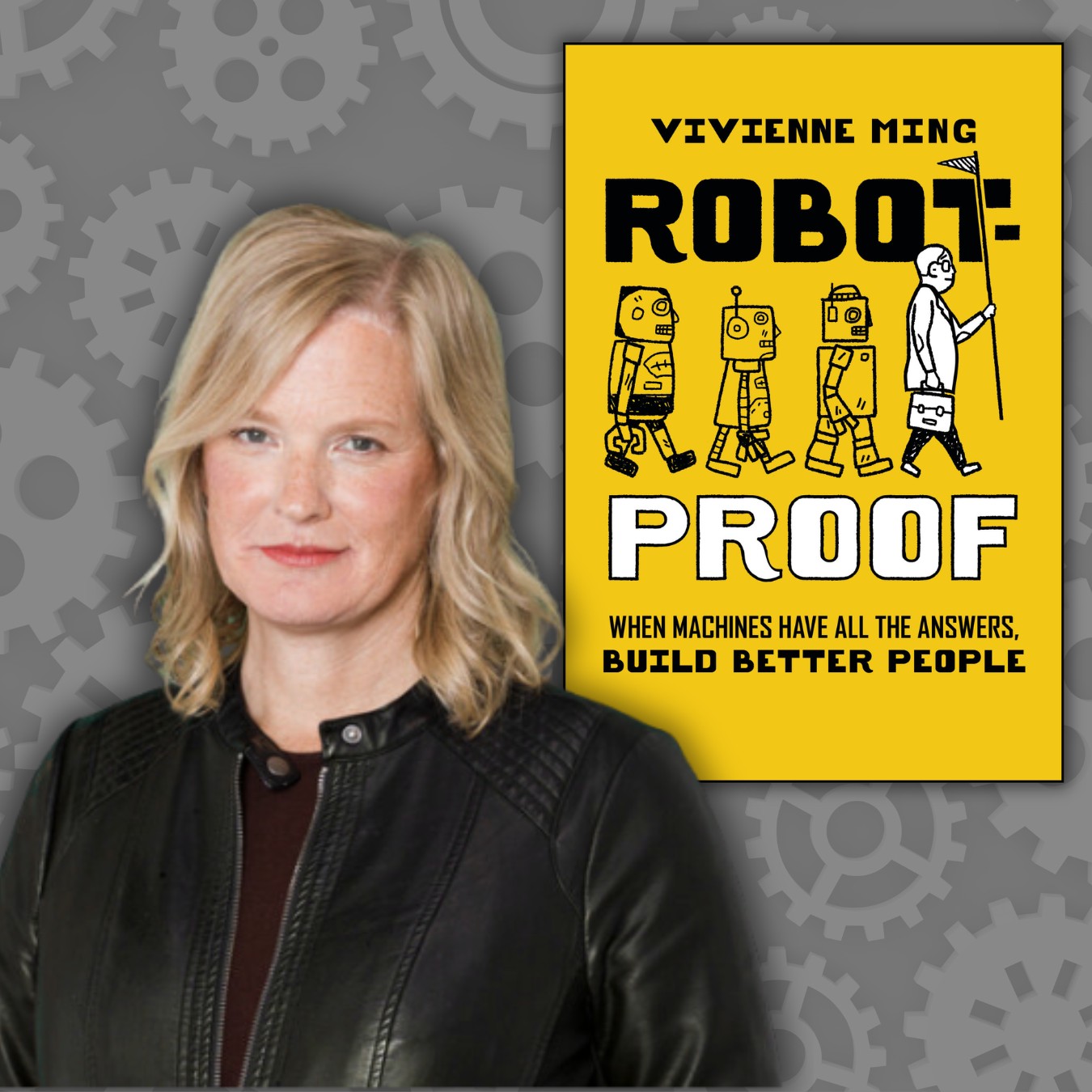
How to Robot-Proof Your Kids (and Yourself) with Dr. Vivienne Ming
Award-Winning Theoretical Neuroscientist, Inventor, and “Demented” Author
Register and Ask Questions Here
Tuesday, May 12th 2026 at 1:00 PM CDT
Join us for a timely conversation on AI, humanity, and the next steps towards building a better future with self-proclaimed “mad scientist” Dr. Vivienne Ming as we discuss her new book, Robot-Proof: When Machines Have All the Answers, Build Better People.
In Robot-Proof, Dr. Vivienne Ming helps readers grasp the ugly and the amazing of how individuals, companies, and societies will respond to the changes that are already taking hold due to the advent of AI. Robot-Proof is a book about people, exploring what it means to be human in an increasingly automated world.
This book presents, then answers, pressing questions that readers may or may not have thought to themselves, such as:
- What predicts long-term life outcomes across millions of little kids?
- Why is the Informational-Exploration Paradox the most terrifying phenomenon you’ve never heard of?
- What predicts the smartest team and how will AI change it?
- Why are ill-posed problems the future work, education, and a robot-proof humanity?
With poignant insight and delicate care to keep us grounded in the human perspective, Robot-Proof is an entertaining and thought-provoking read for all individuals seeking to understand the next steps in a new and completely unprecedented world.
Register today to take part in the discussion!
About the Author:
Dr. Vivienne Ming explores maximizing human capacity as a theoretical neuroscientist, delusional inventor, and demented Author. Over her career she’s founded 7 startups, been chief scientist at 2 others, and founded The Human Trust, a philanthropic data trust and “mad science incubator” building a foundation model for human development. She co-founded Possibility Sciences to advance scientific discovery via massive scale hybrid intelligence. She also develops AI tools for learning at home and in school, models of bias in hiring and promotion, and neurotechnologies for dementia, TBI, and postpartum depression.
In her free time, Vivienne designs AI systems to treat her son’s diabetes, predict manic episodes in bipolar sufferers, and reunite orphan refugees with extended family members. For relaxation, she writes science fiction and spends time with her wife and children.
Vivienne was named one of “10 Women to Watch in Tech” by Inc. Magazine and one of the BBC’s 100 Women in 2017. She is featured frequently for her research and inventions in The Financial Times, The Atlantic, Quartz Magazine and The New York Times.